
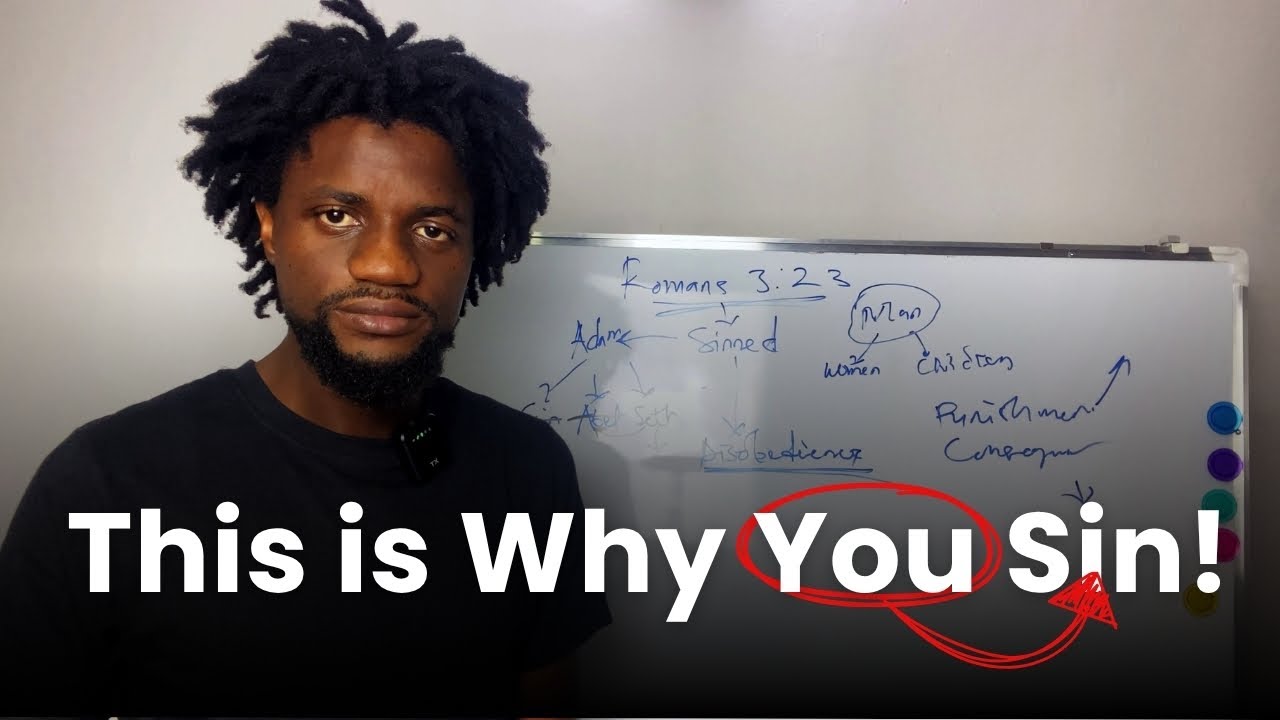
Welcome to a deep exploration of spiritual transformation, where we uncover the profound truths about why sin still affects believers even after they receive new life in Christ. This teaching from Christian Living Academy, led by Michael Adebuke, dives into the heart of what changes—and what doesn’t—when a person becomes born again. Drawing from key scriptures like Romans 3:23, Romans 5:17, and Galatians 5:20-23, we’ll unpack the nature of sin, its consequences, and the path to living a victorious Christian life marked by health, abundance, and righteousness.
Understanding the Fall of Man and the Origin of Sin
All humans have sinned and fallen short of the glory of God (Romans 3:23). But how did this universal condition come about? It traces back to Adam’s disobedience in the Garden of Eden. Although Adam was convinced by Eve, he was ultimately responsible for the first sin—a deliberate act of disobedience that corrupted the spirit God had given him.
Because all humanity descends from Adam, every person inherits this fallen nature. This sinful nature is not just about individual bad actions; it is a deep-rooted condition—a nature—that inclines humans towards disobedience and wrongdoing. This is why every human, regardless of race or tribe, has sinned.
Sin: Both a Nature and an Action
Sin functions both as a noun and a verb. As a noun, it refers to a nature—a corrupt life condition passed down from Adam. This sinful nature powers the actions of sin, the verb, such as lying, stealing, or disobedience. Just as a red light source produces a red reflection, the sinful nature produces sinful actions. Without this corrupt root, sinful behavior would not exist.
The Difference Between Punishment and Consequence
It’s important to distinguish between punishment and consequence, two terms often confused. Punishment is a measured response according to law or covenant—something that can be apportioned and changed. Consequence, however, is a natural outcome that happens inevitably, like planting an orange seed and getting an orange tree.
When Adam sinned, God pronounced punishments—the ground was cursed, and life would require sweat and toil. But alongside these punishments, there were natural consequences: the spirit of man became corrupt, leading to sickness, poverty, and death entering the world. These consequences affect not only humans but all of creation, as God gave man dominion over the earth.
How Sin Introduced Sickness, Poverty, and Death
Before the fall, man lived in a perfect state with no sickness or lack. The body was sustained by a holy life force from God, immune to disease and decay. After sin, this life force was corrupted, making the body vulnerable to sickness and the inevitability of death.
Poverty and lack also entered the world due to sin. In Eden, man had abundance and all needs were met without struggle. Post-fall, man must labor and toil for sustenance, introducing scarcity and poverty. This was never God’s original design but a result of the fallen nature.
Addressing Poverty and Lack
Some misunderstand Jesus’ statement that “you will always have the poor among you” as God’s design for poverty. However, poverty is a consequence of sin and human failure to apply God’s principles. Many remain in poverty due to passive laziness—an unwillingness to apply knowledge or work diligently. The truth is, God’s original plan was abundance for all.
The New Life in Christ: What Really Changes
When a person becomes born again, the sinful nature is replaced by a new spirit from God. This new spirit is perfect and empowered to produce righteousness, health, and abundance. However, the mind—the filter through which this new life expresses itself—often remains influenced by old patterns and corrupt thinking.
This explains why some believers still struggle with sin and its effects. The new spirit is at work, but the mind must be renewed by the Word of God to fully manifest the fruits of righteousness. Over time, as the mind is transformed, sinful behaviors diminish and the believer begins to live more consistently in the new life.
Righteousness as Both Gift and Action
Righteousness is also both a noun and a verb. It is a gift received through faith (Romans 5:17) that enables believers to live rightly. The fruits of righteousness—love, joy, peace, patience, kindness, goodness, faithfulness, gentleness, and self-control—become evident as the mind aligns with God’s truth (Galatians 5:22-23).
Why Believers Still Struggle and How to Overcome
Even after receiving new life, believers can still experience sickness, poverty, and sin because the mind has not yet been fully renewed. The mind acts as a filter, and if it remains corrupted, the results of the new spirit’s life will be hindered.
The work of sanctification—the ongoing process of consecration and renewing the mind—is crucial. As the mind is transformed by God’s Word, the believer’s life begins to reflect the promises of health, abundance, and righteousness more fully.
The Ultimate Victory: Eternal Life
Sin brought death, lack, and corruption, but eternal life in Christ brings the opposite—health, abundance, and righteousness. John 3:16 reminds us that “whosoever believes in Him should not perish but have eternal life.” This eternal life is the source of real peace, joy, and love that surpass human understanding.
Christianity is not merely about outward behavior or self-improvement; it is about receiving a new nature powered by the Spirit of God. Without this new life, any good behavior is only superficial and lacks the power to overcome sin permanently.
Conclusion
The journey from the old man to the new man is a profound transformation that begins with receiving Christ but continues through the renewing of the mind. Sin, sickness, poverty, and death are consequences of the fallen nature inherited from Adam. However, the new life in Christ breaks these chains and empowers believers to live in righteousness, health, and abundance.
Understanding why sin still shows up after salvation helps believers persevere and actively engage in renewing their minds. Through this process, the promises of God become realities in everyday life, reflecting the true nature of the new man in Christ.
May this truth encourage you to embrace the new life fully and walk in the victory that Christ has secured for you.