
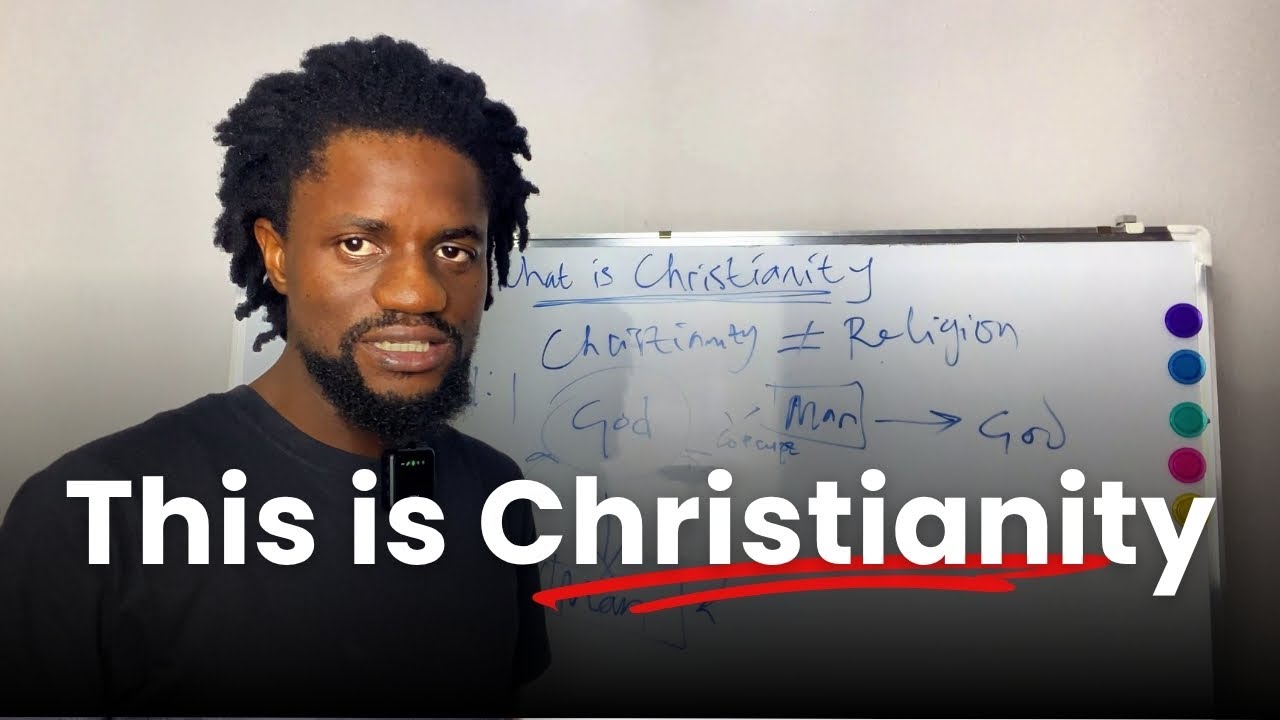
My name is Michael Adegoke and this teaching comes from Christian Living Academy. In this lesson I want to explain clearly what Christianity truly is, why it is not merely another religion, and what it practically looks like for a person who has received the life God offers. Over the years many people misunderstand Christianity because they compare it to religion in general — systems and rituals built by men trying to reach God. But the message of Jesus turns that entire framework upside down: Christianity is God coming to reveal Himself to humanity, restoring the relationship He intended from the beginning. In the paragraphs that follow I will walk you through the origin of man, the problem introduced by the fall, the uniqueness of Jesus Christ, the meaning of receiving new life, and the daily practices that sustain that life. I will also offer practical guidance for new believers and a straightforward invitation if you have not yet made this life your own.
Outline of This Teaching
- What Christianity is—and what it is not
- The origin of man and God’s initial design
- The fall of man and why religions proliferate
- Jesus Christ: God coming in the flesh
- What it means to be given new, eternal life
- How to live the Christian life daily: Bible, prayer, church
- Experiential faith vs. mere information
- The urgency of sharing the Gospel
- Practical next steps for those who decide to follow Jesus
- Conclusion and invitation
What Christianity Is — And What It Is Not
To begin, we must make a fundamental distinction: Christianity is not simply a religion. When people complete forms and a religion field appears, they often write “Christianity,” because society groups faith traditions into the same category. But the word religion, in its most basic sense, describes man’s attempt to reach God — methods and systems humans design to seek and worship their Maker. Religion is, broadly speaking, man trying to find God and connect with the divine through rituals, rules, objects, leaders, or sacred places.
Christianity is radically different. Christianity is God coming to man. It is not the effort of humanity approaching a distant Creator; it is the Creator entering human history and revealing Himself in person. The Bible puts it succinctly: “The Word became flesh and dwelt among us.” Jesus Christ did not offer another method or philosophy; He came in person, claiming divine identity and demonstrating authority over nature, life, death, and the spiritual realm. Where religion in general reflects the longing of a creature to reach a Creator, Christianity reflects the magnanimous initiative of the Creator reaching into the life of His creatures.
That difference changes everything. In religion, we might expect multiple paths to the divine — different roads, rituals, or techniques people try in order to “get there.” Christianity is not one path among many; it is the revelation of a Person who is the only way to the Father. Jesus said, “I am the way, the truth and the life. No one comes to the Father except through me.” This exclusivity is not a harsh policy but a statement about identity: the means to restored relationship with God is found in the life He gave, not in our human inventions.
The Origin of Man: Created in God’s Image
To understand why Christianity is necessary, we must remember how God originally created human beings. Scripture tells us that God made man in His image and likeness. That means human beings were made to reflect God — morally, spiritually, relationally. From that beginning, humanity’s proper functioning was relational: man is designed to live in fellowship with the God who made him.
God did not create us to be autonomous beings who figure everything out by ourselves. Instead, He created us with a dependency — a connection to our Maker that shapes identity, purpose, and destiny. In the Garden of Eden this relational reality was expressed concretely: God walked with Adam in the cool of the evening, engaged in conversation, gave responsibilities (such as naming the animals), and instructed Adam to tend the garden. Fellowship with God was built into the very rhythm of human life.
Because we were created to reflect God and to live in partnership with Him, our flourishing always begins with relationship. The more we align with that design, the more we experience the fullness of life God intended. Conversely, when that relationship breaks down, disorder follows.
The Fall, the Longing for God, and the Rise of Religions
When Adam and Eve sinned, they were expelled from the garden and the intimate fellowship they once enjoyed was broken. Yet, that did not erase the innate human longing for God. Scripture shows God continuing to speak to people after the fall — calling, guiding, correcting. But human beings, now living under the consequences of the fall, found themselves gravitating increasingly toward the realm of the senses. The spiritual hunger remained, but the way people tried to satisfy it changed.
Fallen people tend to seek concrete, sensory expressions of the divine: statues, physical rituals, objects to hold onto. Idol worship and a variety of religious systems grew out of this condition. People would pick things they could see, touch, or manipulate and attach spiritual value to them. In many cases demonic influence exploited that inward longing, attaching counterfeit spiritual power to objects and practices. That is why many religious systems demonstrate power or spiritual phenomena: they have tapped into realities beyond the physical. But no system founded upon lies and deception can accomplish what God alone can do.
Even among those who had direct encounters with God’s power — such as the Israelites who witnessed the plagues in Egypt, the parting of the Red Sea, and the provision of manna — the tendency to return to visible forms of worship remained. The golden calf incident shows how quickly a people revert to their senses when their spiritual maturity is weak. The essential problem was not the absence of God’s power, but human nature corrupted by sin. This corruption prevented people from maintaining the original quality of relationship God intended.
God’s Long Work: Judges, Kings, and the Promise of a Savior
After the fall, God did not abandon humanity. He engaged with fallen people through patriarchs, prophets, judges, and kings. He guided, corrected and preserved a people through whom He would work. Yet these measures were not the end goal. God’s restraining and custodial work pointed to the need for a deeper solution — restoration, not merely management. Animals, judges, and kings could not fix the human heart.
Throughout the Old Testament God’s plan moved steadily toward full reconciliation. The sacrificial system, the calling of prophets, and the covenant promises all indicated that something greater was coming — a Savior who would not merely manage human failure but would undo it by offering new life. After roughly two thousand years of human history shaped by these interim solutions, God sent His Son. The time had come for a decisive revelation, not another religious system to be added to the world.
Jesus Christ: God in the Flesh
When Jesus arrived, He did something no other religious founder had done: He entered history as the Creator Himself in human form. His conception was miraculous, His life full of authority, and His words bold: He claimed to be God and demonstrated that claim by commanding nature, healing the sick, and ultimately overcoming death. The cross and the resurrection are the hinge of history. Jesus died for sin and rose again, demonstrating His victory over death and establishing the possibility of new life for those who believe.
“I am the way, the truth and the life. No one comes to the Father except through me.”
That statement is central: it reveals the uniqueness of Christ and clarifies that restored relationship with God is not achieved through human effort alone but through union with the life Jesus offers. The resurrection is not merely a miraculous sign; it is the proof that death has been defeated and that the life Jesus gives is available to us now.
Sin, Nature, and the Need for a New Life
To grasp the gospel fully we need to understand the problem that made it necessary. After the fall a sinful nature entered the human heart. Sin is not just a list of wrong actions; it is an inward disposition that distorts desire, judgment, and behavior. You do not sin merely because you choose to in a vacuum; you sin because your nature is broken and inclined away from God. Religion in many forms attempts to fix behavior — rules, rituals, sacrifices — but those methods cannot change the heart.
The gospel addresses the root problem. Jesus did not come to offer a new moral code only; He came to give new life. This new life is not a better set of behaviors; it is God’s own life implanted in the human spirit. When a person believes in Christ — acknowledging their sin, receiving His atoning work, and confessing allegiance to Him — they are given a new spirit. The old, corrupt nature is not merely reshaped; the believer receives new spiritual life that unites them to Jesus.
Put simply: religion is man seeking God, but Christianity is God supplying the life we need to truly know and fellowship with Him. That life is the life of the Trinity, made accessible through the Son and carried into us by the Holy Spirit.
What Receiving New Life Looks Like
Becoming a Christian is not primarily about joining a club or adopting a philosophy. It is about receiving a real, spiritual transformation. When you put your trust in Christ, you are born again — your spirit is enlivened by God. This is why the New Testament speaks of believers as “born of the Spirit” and as having “eternal life” even now.
Receiving new life involves several essential realities:
- Forgiveness of sin: The penalty of sin is dealt with through Christ’s sacrifice. Believers are forgiven.
- Union with Christ: The believer is united with Jesus by faith; His life becomes the believer’s life.
- Indwelling Holy Spirit: The Spirit of God comes to live inside the believer, guiding, teaching, and renewing.
- Changed destiny: The believer is no longer heading toward spiritual death and separation from God; their eternal destiny is changed.
This is not merely theological language. It is concrete reality that changes how you relate to God, how you experience life, and what hope looks like for the future.
Daily Life in the New Creation: The Rhythm of 24 Hours
One of the central claims I make is that Christianity is not a once-and-done transaction. The new life in Christ is meant to be experienced and cultivated daily. The Christian life is a relationship, and relationships require ongoing communication, devotion, and participation. I often point to the 24-hour rhythm of existence — we eat, sleep, work, rest, and interact within that cycle. God designed human life around daily dependence, and our spiritual life is no different.
In the Old Testament, God provided manna daily for the Israelites; they were instructed to gather what they needed for each day and not hoard. That pattern teaches us something essential: spiritual nourishment is received day by day. We are not designed to draw from spiritual reserves that never get renewed. The Holy Spirit is meant to be our daily sustenance.
Jesus’ own life demonstrates this. He communed regularly with the Father, He prayed, and He engaged in ongoing ministry. Even Jesus experienced temptation, showing us that a life aligned with God does not eliminate struggle. The presence of temptation underscores the need for daily reliance upon God’s strength and the Spirit’s guidance.
The Means of Grace: Bible, Prayer, and Church
How does the Christian maintain and grow in this new life? There are ordinary, daily practices that form the responsibility and privilege of every believer. These are not empty rituals; they are means of grace through which God chooses to shape, feed, and form us.
The Bible: Our Written Foundation
The Bible is the written word of God — a collection of 66 books historically affirmed and tested by the church as canonical. These books were written by different authors over many centuries but they cohere in testimony about God and His plan. The Scriptures testify to Christ from Genesis to Revelation, and they are the primary way God communicates truth to us in written form.
Studying the Bible daily matters for several reasons:
- It renews the mind: The believer’s mind must be transformed by truth so that behavior follows rightly.
- It forms doctrine: Clear teaching guards us from falsehood and confusion.
- It becomes lived truth: The aim of reading Scripture is not accumulation of facts but inward transformation — to become people who live by what we read.
- It is historically reliable: Archaeology, ancient manuscripts, and consistent testimony across Scripture make it uniquely credible among ancient texts.
We read and meditate on Scripture daily so the new life implanted in our spirit can grow into the full measure of Christ’s stature. A newborn believer is like a tiny child — their spirit is alive but their mind and habits must mature. This growth happens as we absorb and practice the truth of God’s Word.
Prayer: Conversation With the Living God
Prayer is simply communication with the God who has come near. It is the expression of dependence, gratitude, confession, and petition. Prayer is not just devotional activity; it is how the believer stays connected to the heart and will of God. The Holy Spirit helps us pray and interprets our longings before the Father. Through prayer we are shaped, comforted, and empowered.
Prayer is not merely saying words to check a spiritual box. It is engaging with the living God who hears, responds, and transforms. It should be regular, honest, and expectant.
Church Community: Fellowship, Accountability, and Protection
God intends that His people gather. The New Testament church met together, broke bread, prayed, taught, and encouraged one another. This communal life is not optional or merely desirable; it is central to Christian formation. The church is a place where the gifts of the Spirit are exercised, where teaching shapes believers, and where mutual accountability protects against deception.
Being part of a local church gives you teachers, spiritual family, and people who notice things you might miss. When we gather together we are strengthened. The early church met in homes, shared life, and grew through repeated fellowship. We need other believers both to receive and to give spiritual strength.
Experiential Knowledge vs. Mere Information
There’s a crucial difference between knowing about Christianity and living Christianity. Many people can recite theology, quote verses, and know historical facts. Yet, knowledge alone does not translate into transformed living. The goal is experiential knowledge — truths lived and tested in your life.
Consider the analogy of a phone: you may know it can make calls and browse the internet, but until you pick it up and use it, it remains theoretical. The same is true with Scripture and faith. Reading and learning are essential, but the aim is that the Word becomes flesh in us: we test it, trust it, obey it, and see it work.
This experiential faith produces fruit: joy, peace, love, patience, and the other marks of the Spirit. When your faith is experiential, it is no longer mere information; it is living reality. That is why the disciplines of Bible study, prayer, and community are so crucial. They move truth from the head into the heart and the life.
Why Christianity Proclaims Exclusivity — And Why It Is Urgent
Christianity claims that Jesus is the only way to the Father. This truth can feel uncomfortable in a pluralistic world that says all roads lead to God. But the claim is not made from arrogance; it is made from the conviction that human beings need more than techniques or rules — they need a rescued heart and a living union with the God who made them. Jesus’ unique person and work accomplish what no other religious system can: a real change of nature and access to the life of God.
This raises a serious urgency. If there is, in fact, only one way to be reconciled to God, then the spiritual destination of people matters. The Bible speaks plainly of judgment and the reality of separation from God for those who reject His provision. For those who know this truth, it fosters compassion and urgency — an impulse to tell others about the life that is freely offered.
Sharing the gospel is not an exercise in condemnation; it is an act of profound love. If you believe someone’s eternal destiny is at stake, you will be motivated to tell them the truth out of compassion. The love of Christ compels us to share, not to shame. We speak because we care.
Practical Steps for the New Believer
If you have just received this message and you have decided to follow Jesus, welcome. You have entered into a new reality. Here are practical, simple steps to help you begin to live out the life God has given you:
- Confess and Believe: Begin by acknowledging your need for Christ and believing He died and rose again for your forgiveness. Confession is both inward and outward: tell God and tell another believer.
- Pray Daily: Build a habit of talking to God each day. Start small if needed — five to ten minutes is better than nothing. Be honest in prayer: gratitude, confession, requests, listening.
- Read Scripture: Begin with the Gospels (Matthew, Mark, Luke, John) to encounter Jesus’ life, words, and ministry. Read a short passage each day and ask God to speak to you through it.
- Find a Local Church: Join a community of believers where you can grow, receive teaching, and be held accountable. Be faithful to meet with other Christians regularly.
- Share Your Faith: Tell one friend or family member about your decision. You do not need to be brilliant; simply share what Jesus has done for you.
- Ask for Baptism: Baptism is a public step of obedience that identifies you with Christ’s death and resurrection. Speak with your church leaders about being baptized.
- Practice Obedience: Apply what you learn from Scripture. Faith grows as you act on God’s word. Small acts of obedience build spiritual maturity.
- Stay Connected: Find a mentor or small group where you can ask questions, confess struggles, and receive prayer.
A Simple Prayer to Receive Christ
If you want to make a decision right now, you can pray from your heart. The words themselves are not a magical formula; sincere faith is what matters. Here is a simple prayer you can pray to express your faith and invite Jesus in:
“Dear Jesus, I believe that I am a sinner and I believe that you died for me, that you paid for my sins. Today, I receive forgiveness for my sins and I accept you as my Lord and personal Savior. Thank you for saving me.”
If you prayed those words sincerely, welcome to the family of God. You are born again. You are a child of God. I encourage you to tell someone — a pastor, a Christian friend, or a leader you trust — so you can receive guidance on your next steps.
How the Church Should Respond
For those of us who have been Christians for some time, our responsibility is to disciple and support new believers. The early church gathered disciples, taught them the apostles’ teaching, and helped them apply truth in life. That same spirit of loving instruction and patient discipleship should guide every local church today.
Discipleship is not simply transmission of facts; it is formation. We help new believers learn to pray, to read Scripture, to resist temptation, and to live as witnesses. We also protect them through accountability and encourage them to take practical steps of obedience, including baptism and serving in the community.
Addressing Common Questions and Objections
Many questions arise when people begin to think about Christianity more carefully. Let’s address a few common concerns:
“Isn’t Christianity just another religion?”
No. Christianity is unique because it is God revealing Himself in the person of Jesus Christ. Religions generally describe humanity’s attempts to reach an unknown God. Christianity is God reaching into history and offering Himself, personally and freely.
“What about other religions that show power?”
Some religions and spiritual systems show manifestations of power, signs, or miracles. Spiritual realities are complex and the existence of phenomena does not mean the source is the true God. The crucial questions are: who is the source, what is the nature of the power, and what is the end it produces? The life Jesus offers produces transformation into love, holiness, and eternal communion with God. The resurrection of Jesus is the decisive proof that God’s plan succeeded.
“Is Jesus’ claim of exclusivity intolerant?”
When Jesus says He is the only way, He is describing how the relationship with God is restored. This statement is not a license for hatred; rather, it should prompt deep love and urgency to share what we believe. If the claim is true, withholding it would be unloving. Our response should be humility, compassion, and faithful proclamation.
Living Out the Life: Practical Habits That Shape Character
The Christian life is lived out through habits that reflect dependence on God. Here are practical actions that cultivate spiritual growth:
- Regular Bible reading: Even short daily readings compound into deep maturity over time.
- Daily prayer and silence: Learn both to speak with God and to listen for His voice.
- Worship: Corporate and private worship keep our hearts aligned to God’s greatness and love.
- Service: Serving others expresses God’s love and shapes humility.
- Confession: Admit sin promptly and receive God’s forgiveness through accountability.
- Scripture memorization: Hide God’s Word in your heart to use when tempted or confused.
- Sabbath rhythm: Rest intentionally to remember God’s lordship over time and work.
The Long View: Growth Toward the Full Stature of Christ
Paul describes the Christian journey as growth into the “full measure of the stature of Christ.” At conversion a person receives the life of Christ within their spirit, but the mind, habits, and emotions still need transformation. This process is called sanctification: being set apart and becoming like Christ over time.
Sanctification is progressive. A new believer may be fragile and small in spiritual understanding, but as the mind is renewed by Scripture and the heart practices obedience, the believer grows. We are not made perfect immediately, but God’s life in us matures us into the likeness of His Son. This is both encouraging and demanding: encouraging because the life we need has already been given; demanding because we must participate by faith, obedience, and community.
Final Encouragements and an Invitation
Christianity is more than beliefs or rituals. It is the life of God given to needy people. It is God’s condescending love meeting our deepest poverty and offering Himself as the remedy. If you have accepted this gift, remember: your new life must be nurtured daily. Read the Bible, pray, join a local church, and connect with other Christians who will help you grow. If you have not decided yet, I encourage you to pray honestly and to seek God. He is not distant; He has come near in Jesus Christ.
If today you received Christ by faith, I am overjoyed for you. Tell someone. Seek teaching and community. If you would like guidance on what to do next, reach out to a pastor or a mature believer and ask for baptism, spiritual mentoring, and a place to serve. If you want to share your decision with me, send a message or leave a comment and I will follow up with helpful next steps.
Thank you for reading this teaching from Christian Living Academy. My hope is that you now see Christianity the way God intended it to be understood: not as a competing religion among many but as the life-giving revelation of God in Christ. Live this life daily. Love deeply. Share boldly. Walk by faith, not merely by sight, and you will begin to experience the fullness of the life God came to give.
If you found this helpful, please take your next step: read one of the Gospels this week, find a local church, and tell one person what Jesus has done for you. May the Lord bless you and keep you as you walk in His life and light.